


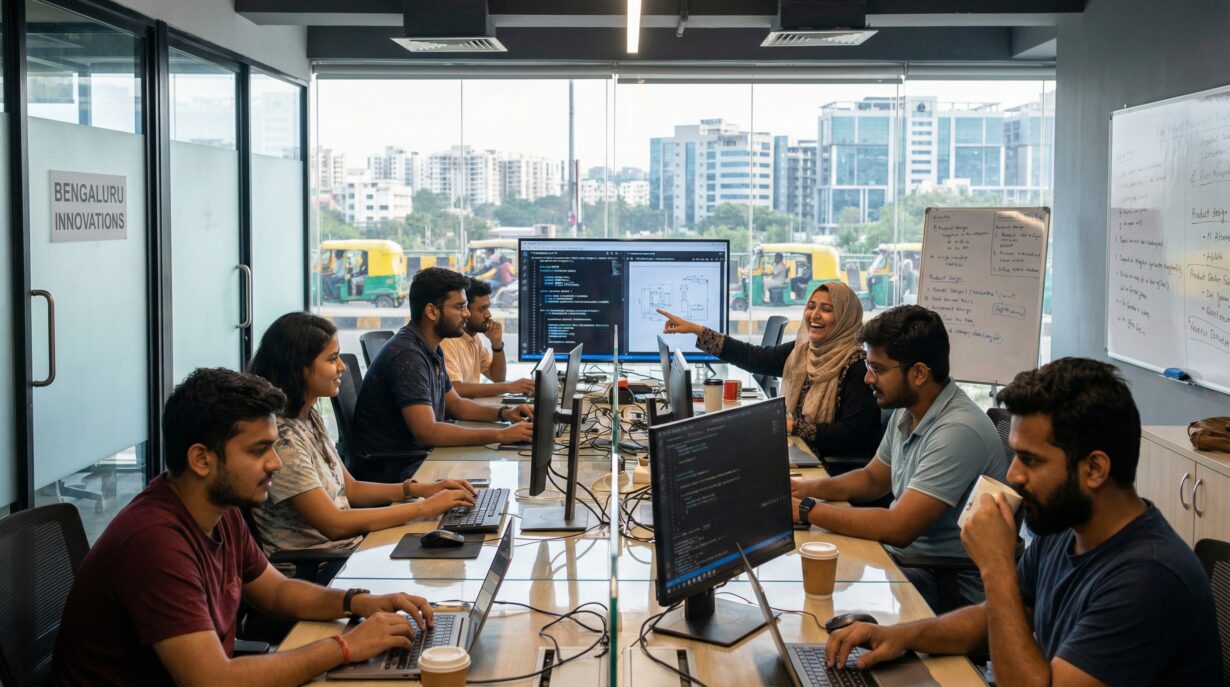

Bengaluru is no longer just India’s IT city. It has grown into one of the world’s most active startup ecosystems, home to over 16,000 startups, 50 percent of India’s unicorns and a founder community that is building products used by businesses and consumers across six continents. This blog takes a close look at why Bengaluru startups have reached this position, what the 2024 and 2025 funding data actually shows, which sectors are attracting the most capital, and what challenges the city still needs to work through. Whether you are a founder, an investor, or a professional tracking where Indian technology is heading, the story of Bengaluru’s startup growth is one you cannot afford to read selectively.
Three Decades of Building toward a Product Economy
India has produced some of the world’s most recognized technology companies, and a large portion of them trace their origins to one city. Bengaluru has spent the last three decades building the kind of infrastructure, talent base, and investor confidence that most cities take generations to develop. What started as a hub for IT services outsourcing has grown into a place where original products are built, funded, and scaled to serve markets across the world. The startup activity happening in Bengaluru today is not a recent trend. It is the result of compounding investment in education, policy, and community that has been building steadily since the early 1990s.
What the 2024 Funding Numbers Actually Show
The numbers make the case clearly. Bengaluru is home to over 16,000 startups and hosts 1,536 venture capital firms, 2,256 corporate venture arms, and 17,000 angel investors. In 2024, the city closed 285 startup deals, a 14 percent increase from 249 deals in 2023, leading every other Indian city in deal volume. Total capital raised by Bengaluru startups reached 3.43 billion dollars in 2024, with Mumbai narrowly exceeding that figure in absolute capital terms largely because of Zepto’s 1.3 billion dollar mega round. Bengaluru’s seed stage startups raised 268 million dollars in 2024, a 26 percent year-on-year increase, signalling continued early-stage confidence. Since 2014, Bengaluru-based startups have raised over 72 billion dollars, accounting for 45 percent of India’s total startup funding over that period. In 2025, Bengaluru reclaimed the top spot, raising over 4.5 billion dollars across 300 deals.
The Shift From Services to Products
One of the more interesting shifts happening in Bengaluru’s startup scene is the move from services to products. For years, the city’s technology reputation was built on delivering software services to clients abroad. That model still exists and still employs hundreds of thousands of people. But a parallel economy of product-first companies has taken root and is growing faster than most observers expected. SaaS companies based in Bengaluru are now selling subscriptions to businesses in the United States, Europe, and Southeast Asia. Fintech platforms are processing billions of dollars in transactions monthly. Healthtech companies are connecting patients to doctors across geographies that traditional healthcare infrastructure had not reached. This product orientation is what makes Bengaluru’s current startup generation structurally different from what came before it.
The Sectors Pulling the Most Capital and Attention
The sectors leading this growth are worth examining individually. Enterprise technology has been the top sector in Bengaluru over the last decade, with 753 deals closed between 2014 and 2024, followed by fintech with 603 deals and e-commerce with 488. Financial technology has seen particular momentum, with Bengaluru based companies building payment infrastructure, credit scoring tools, digital lending platforms, and insurance distribution networks. Healthtech experienced a significant boom in 2024, with companies like Healthify, Orange Health, and 4baseCare closing meaningful rounds. Vertical AI and deep tech also emerged as high-interest categories for investors in 2024, with Bengaluru positioned as the world’s second-largest AI talent hub, home to 600,000 AI and machine learning professionals.
Policy Support and Its Real Impact on Startups
The government’s role in this growth is often underestimated in public discussion. The Startup India initiative launched in 2016 created a registration framework, tax benefits and a network of incubators that made it easier for early companies to operate legally and access resources. Karnataka’s state government has been active in supporting technology entrepreneurship through its Karnataka Startup Policy 2022-27, which provides tax benefits, an INR 100 crore venture capital fund, and dedicated support for deep tech startups. In the 2025-26 budget, the Karnataka government allocated 36 million dollars for a Fund of Funds initiative and an additional 12 million dollars specifically for deep tech development.
The Network Effect That Keeps Bengaluru Ahead
What keeps Bengaluru at the top of India’s startup rankings is not just history or infrastructure. It is the density of the network. When a founder in Bengaluru needs an introduction to an investor, a lawyer who understands startup equity or an engineer with a specific skill set, the search radius is small. The city’s startup community has developed informal but highly effective knowledge sharing norms. Founders who have already raised capital make time to help those who are just starting. Investors who have backed successful exits are increasingly writing early checks into new companies. This recycling of capital, knowledge and relationships is what keeps the ecosystem productive across cycles.
Challenges that come with being the Top Startup City
The road ahead for Bengaluru startups is not without complications. The cost of talent has risen sharply, and retaining experienced engineers has become expensive for early-stage companies competing against well-funded incumbents. Office space in prime areas has become costly, pushing many startups to Whitefield, Electronic City and other corridors. Infrastructure challenges including traffic congestion remain genuine operational concerns for companies that need their teams co-located. These are problems that growth creates, and they require city-level planning to address effectively. Despite these pressures, Bengaluru’s startup trajectory remains upward and its global ranking improved seven places to number 14 in the Global Startup Ecosystem Report 2025.
Stay Connected with Bengaluru’s Startup Movement
For anyone tracking where Indian technology is heading, following Bengaluru’s startup activity is not optional. It is where the most significant bets are being placed, where the most interesting products are being built, and where the people shaping the next decade of Indian technology are doing their work. Visit Bengloor for the latest startup news, funding announcements, and founder stories coming out of Bengaluru. If you want to stay current with how India’s most important technology city is evolving, Bengloor is where that conversation is happening every day.