

There are tourist spots in every city that are visited because they appear on every list, and then there are places that genuinely deserve the attention they receive. Bangalore has both, but the must-visit places in Bangalore outlined here fall firmly into the second category. They represent the city at its most historically rich, architecturally interesting, culturally alive, and locally authentic. Whether you have two days or five, these are the places to build your itinerary around.
Iconic Landmarks and Heritage Sites

Vidhana Soudha is where Bangalore’s political and architectural identity converge in one building. Completed in 1956, the structure serves as Karnataka’s legislative assembly and secretariat and is one of the largest legislative buildings in India. The building’s granite exterior combines South Indian temple elements, Mysore palace influences, and a formal symmetry that makes it look simultaneously ancient and deliberate. It is not open for general interior visits, but viewing it from the gates of Cubbon Park during the day and returning on a Sunday evening or national holiday when it is fully illuminated gives you two very different and both worthwhile experiences.

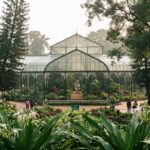
Lalbagh Botanical Garden’s glass house is one of the most unusual structures in Bangalore and one that even regular visitors often forget to look at properly. Built in 1889 and modeled on the Crystal Palace of London, the glass house sits on a slight elevation inside the garden and is used for the biannual flower shows. Visiting during the January flower show, when the interior is filled with an extraordinary arrangement of flowers, potted plants, and sculpture made from botanical materials, is one of the more memorable sensory experiences the city offers.
Religious and Spiritual Spots

Bull Temple in Basavanagudi in South Bangalore is built around one of the largest granite monolithic Nandi statues in India. The statue is estimated to be around 4.5 meters high and over 6 meters long and sits inside a structure whose stone columns and low ceilings give the space an atmosphere of age and weight that newer temples rarely have. The neighborhood around the temple, Basavanagudi, is one of Bangalore’s oldest residential areas and is worth exploring on foot before or after the temple visit. The nearby Bugle Rock Park, Gavipuram Cave Temple, and the old peanut market on DVG Road add context to the area.

ISKCON Temple on Chord Road in Rajajinagar is one of the largest ISKCON temples globally and was consecrated in 1997. The temple complex is architecturally ambitious, with multiple shrines, intricate carvings, and a general scale that makes it impressive regardless of your relationship to the Vaishnava tradition it belongs to. The evening aarti draws large gatherings and the sound, light, and organized devotion of the event creates an atmosphere that is worth experiencing.
Art, Culture, and Market Experiences

KR Market, also known as City Market or Krishna Rajendra Market, is one of the largest wholesale flower and vegetable markets in South India. The flower section, which operates from very early morning through mid-morning, is where garlands, loose flowers, and fresh blooms for temples and households across the city are traded in volumes that are genuinely striking to witness. Arriving between 5 and 8 AM gives you the most active trading period. The colors, the scale, and the organized chaos of the market create a photographic and sensory experience that represents a layer of Bangalore’s daily life that the standard tourist circuit rarely reaches.
Commercial Street in the Shivajinagar area is Bangalore’s oldest and most continuous shopping street and remains one of the better places to buy textiles, jewelry, and general goods at prices lower than the malls. The street has been in its current form since at least the 1960s and still has a density of small shops, street vendors, and foot traffic that feels genuinely different from the organized retail of the city’s newer commercial zones.
Neighborhood Walks and Local Food Worth Including

Basavanagudi, as mentioned near the Bull Temple, is the neighborhood for anyone who wants to see how Bangalore’s older residential areas look and feel. The streets around DVG Road, Gandhi Bazaar, and the routes toward Lalbagh have a combination of old houses, mature trees, small temples, and local shops that has survived relatively intact compared to how much of central Bangalore has changed.
Malleswaram in northwest Bangalore is another neighborhood that rewards walking. The weekly markets on Margosa Road, the temples along 8th Cross, and the food at local darshinis and traditional sweet shops give you a version of Bangalore that has been here for over a century.
For detailed location guides, transport directions, and local tips for each of these must-visit places, visit Bengloor. Suggested walking routes for Basavanagudi, Malleswaram, and the old city area are available at Bengloor.
Build Your Bangalore Itinerary Around These Places
The must-visit places in Bangalore listed here cover the city’s historical, spiritual, cultural, and local character in a way that no single afternoon can. Spread them across two to three days, mix the landmark visits with neighborhood walks, and include at least one market visit in the early morning. That combination gives you a picture of the city that goes well beyond what most visitors leave with.

Other Articles
Getting Around Bengaluru by Metro, BMTC or Cab?
What is the history of Lalbagh Botanical Garden?