


The best way of getting around Bengaluru is the metro for trips along its lines, BMTC buses for areas the metro does not reach, and cabs only for the last mile or off-peak hours. No single mode wins every trip, so the right answer is to match the mode to your route and the hour you travel. The reason this matters is simple. A traffic police study found Sarjapur Road, built for 2,400 passenger car units, now carries between 6,450 and 8,586 units toward Iblur during peak hours. When a road runs at three times its design load, no clever shortcut saves you. The mode you pick and the hour you travel, decide your day.
Where Namma Metro wins
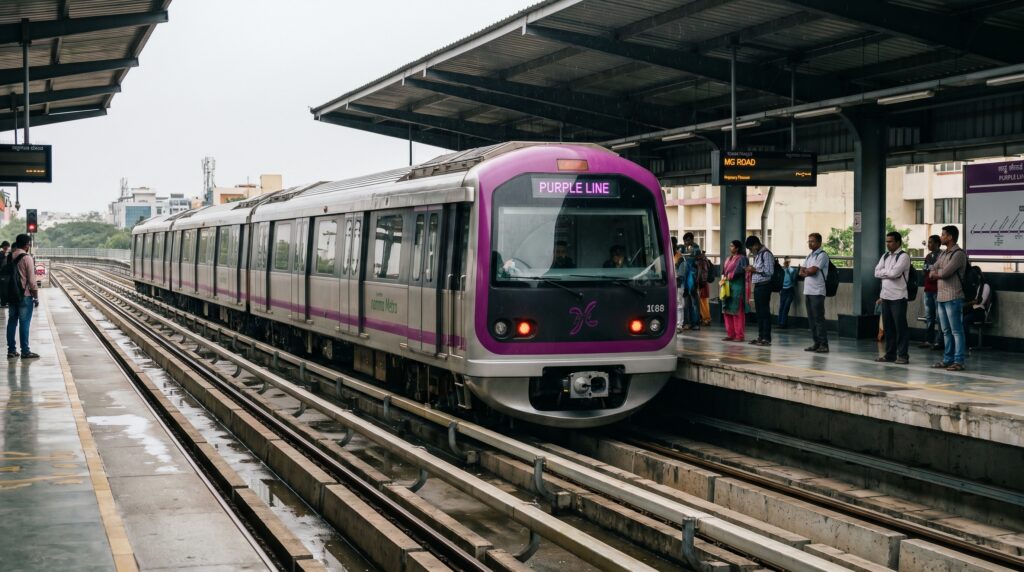
The metro is the one option that ignores road traffic entirely, and the network has grown enough to be useful for real journeys. Namma Metro now runs three operational lines across 83 stations, with average daily ridership crossing nine lakh in April 2026. The Purple Line runs east to west from Whitefield to Challaghatta through MG Road and Majestic, while the Green Line runs north to south from Madavara to the Silk Institute. The Yellow Line, opened in August 2025, links RV Road to Bommasandra through BTM Layout and Electronic City, with 16 stations.
For trips that follow these spines, the time saving is large. During the morning and evening peaks the metro can cut journey times by up to 70 percent compared with road travel. A smart card costs fifty rupees and shaves a little off each fare, so it pays for itself quickly if you ride often. Trains run from early morning until about eleven at night, which covers most commutes and a fair share of evening plans.
The gap to know about is the east. The Blue Line, which will connect the ORR tech belt and the airport, is still under construction. So if your day centres on Marathahalli, Bellandur, or Sarjapur Road, the train cannot yet carry you the whole way, and you will combine it with a bus or a cab.
Where BMTC buses make sense
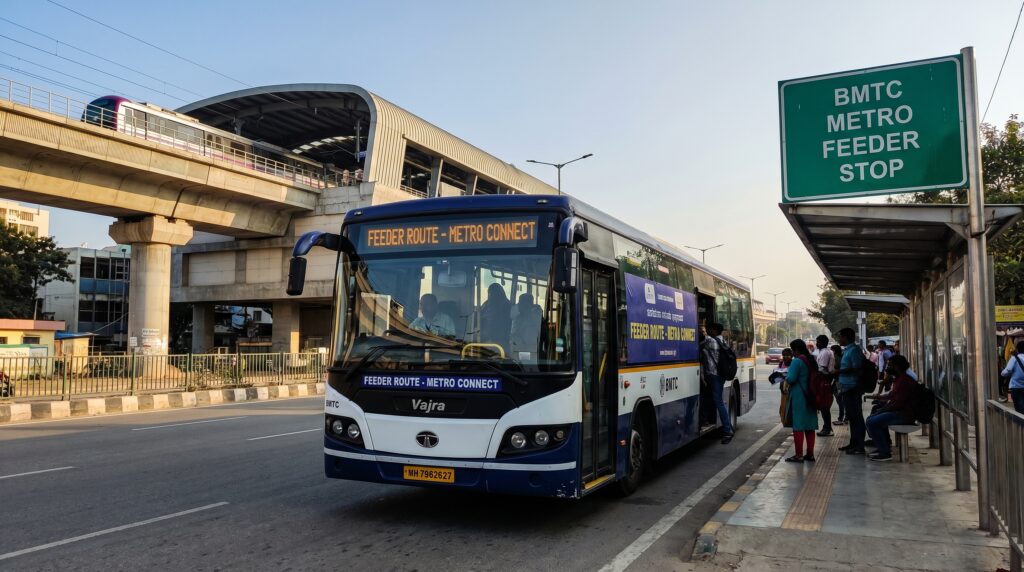
BMTC fills the routes the rails miss. The network reaches deep into neighbourhoods that no metro station serves, and the Vajra air-conditioned services run frequently along the ORR and to the airport. For a single rider, a bus costs far less than a cab over the same distance, and a daily or monthly pass brings the per-trip cost down further for regular commuters
Buses do share the road, so they sit in the same jams as cars during peak hours. The way to use them well is to treat them as feeders. Ride a bus from your area to the nearest metro station, switch to the train for the congested middle stretch, then take a short bus or auto hop at the far end. Major terminals are built for this, since the metro and BMTC connect at several interchange points. This mix usually beats a single long cab ride that crawls through three choke points.
Where cabs and autos still help
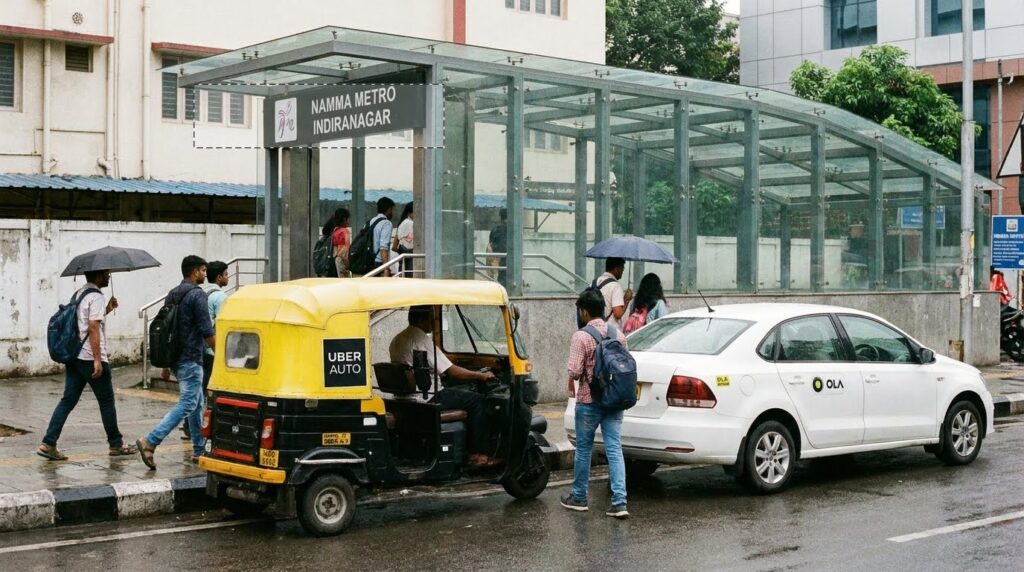
Ride-hailing apps and autos earn their place for two jobs. The first is the last mile, the gap between a station and your door that is too far to walk and poorly served by buses. The second is off-peak travel, late evenings or mid-morning, when roads open up and a cab becomes genuinely quick.
What they cannot do is rescue you during the worst hours. Traffic data shows Gokaldas Images Junction in the north reaching queues of nearly ten kilometres in the morning, while Veerannapalya near BEL tops the evening list at almost sixteen kilometres on average. A cab in that queue costs more than a bus and moves no faster. Surge pricing also climbs exactly when you most want to leave, so booking a cab into a peak jam is the most expensive way to sit still.
The golden hours that beat the jams
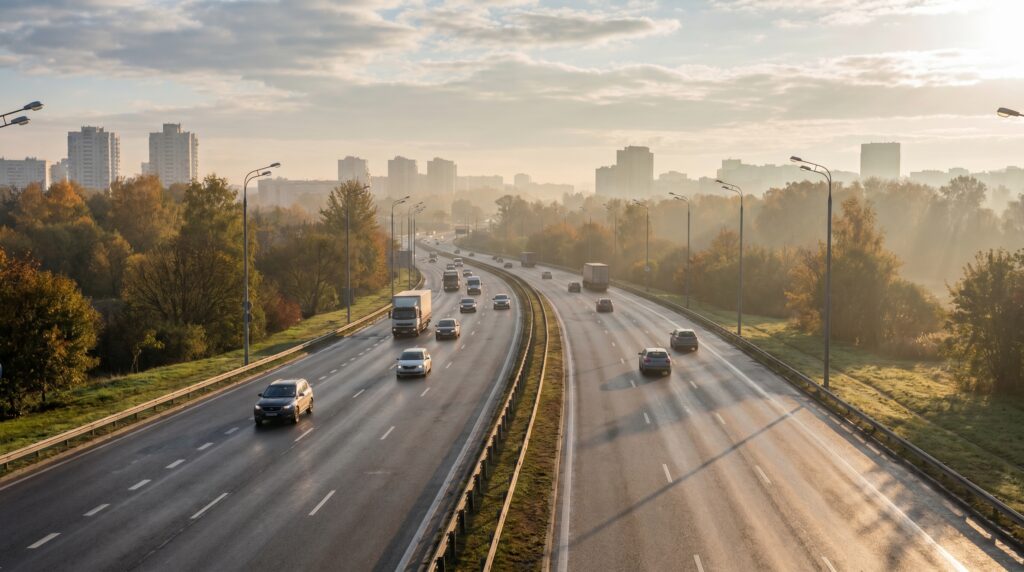
Timing is the lever most people ignore. Bengaluru’s road traffic peaks roughly between 8 and 10 in the morning and again between 5.30 and 8.30 in the evening. On the suburban highways out of Whitefield, Sarjapur, and Electronic City, slowdowns can begin as early as 7.30 in the morning and build through to about 10. The quiet windows sit on either side of these blocks.
If you can start a road journey before 7.30 in the morning or after 10.30, you skip the worst of the build-up. In the evening, leaving before 5 or waiting until after 8.30 makes a similar difference. These golden hours apply to anything on wheels on a shared road, so they shape when to take a bus or a cab. The metro is the exception, since it holds its schedule regardless of the hour, which is why peak time is precisely when the train pulls furthest ahead of the car.
Two more factors swing the odds. Rain turns a normal evening into gridlock within minutes, and the live picture changes daily, so checking a maps app before you leave is worth the thirty seconds. Ongoing metro construction has also narrowed several service roads along the ORR, which is part of why that corridor jams so reliably.
Putting it together
A simple rule covers most days in Bengaluru. If your origin and destination both sit near a metro line, take the train and ignore the traffic. If only one end does, ride the metro for the long middle and use a bus or auto for the short ends. If neither does, plan the trip into a golden hour and accept that road travel during peak time will be slow whatever you book.
The honest takeaway is that getting around Bengaluru is less about finding a secret route and more about refusing to fight the road on its worst terms. Use the rails where they run, lean on buses for coverage, save cabs for the last mile and the quiet hours, and let the clock do the heavy lifting.

Other Articles

Must Visit Places in Bangalore for Every Traveler