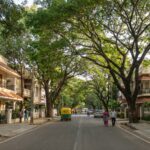


The name Kempegowda appears across Bengaluru with remarkable frequency. It is found on the international airport, on major roads, on public squares and on institutional buildings across the city. For many of the millions of residents and visitors who encounter this name daily, it registers only as a geographical marker or a label attached to infrastructure rather than a person.
The story behind the name is the story of how one of South Asia’s largest cities came into existence in 1537. This occurred through the deliberate and systematic vision of a single chieftain working under the authority of a declining empire. The choices Kempe Gowda I made about where to build his fort, how to organise his markets, where to locate his watchtowers and which water bodies to construct proved so fundamentally sound that successive rulers spanning five centuries found no reason to abandon the framework he established. He did not found a settlement that happened to grow into a city. He designed a city and was patient enough to wait for it to grow into itself.
The Political Context of a Chieftain of the Vijayanagara Empire
Kempe Gowda I was a chieftain of the Morasu Vokkaligas who held authority over a small domain in the region that is now Bengaluru. He served as a feudal subordinate of the Vijayanagara Empire. The Vijayanagara Empire dominated much of peninsular India between the 14th and 17th centuries. By the mid-16th century, it was showing signs of the internal fractures that would eventually lead to its catastrophic defeat at the Battle of Talikota in 1565.
The empire’s administrative reach extended across much of the Deccan plateau and into the far south, but effective local governance was carried out through a network of chieftains, nayakas and feudal lords who owed nominal allegiance to Vijayanagara while managing their own domains with considerable autonomy. Kempe Gowda operated within this political structure and received permission from the Vijayanagara court to construct a new settlement on land under his jurisdiction. Tradition holds that he received this from Emperor Achyuta Deva Raya. The permission was neither unconditional nor unlimited. The Vijayanagara court reportedly grew suspicious of Kempe Gowda’s ambitions as the settlement grew and imprisoned him for a period but the project he set in motion outlasted every political constraint placed upon it.
The Fort and the Markets and the Pete System
In 1537, Kempe Gowda built a mud fort at what is now known as the Old Fort area of Bengaluru. This is located close to the present-day Krishna Rajendra Market. This fort was constructed of clay and timber and was subsequently reinforced. It served as the administrative and defensive centre of the new settlement. Around this fort, he laid out a system of market streets, known as pete in Kannada, where each was designated for a specific trade. This spatial organisation was standard practice in the urban planning traditions of South India under Vijayanagara influence.
The logic was practical and elegant. By concentrating specialists of a single trade on a single street, both buyers and sellers reduced their transaction costs. Quality could be assessed more easily through comparison and the collective reputation of a street reinforced the individual reputation of each merchant on it. The names of the original pete streets encode the trades they housed. Aralepete was for cotton, Balepete was for bangles and accessories, Chickpete was for cloth, Nagarthapete was for merchant activity and Tigalarapet was for the Thigala community of farmers and market gardeners who supplied the city’s food.
Beyond the market streets, Kempe Gowda erected four watchtowers at the boundaries of his intended city. These were located at what are now Lal Bagh, Ulsoor, Mekhri Circle and Kempapura Agrahara. These towers were not military structures in the conventional sense. They were boundary markers and declarations of the city’s intended extent. This represented a scale of urban ambition that the settlement would take centuries to grow into.
Civic Infrastructure including Tanks and Temples and Roads
Kempe Gowda’s contribution to Bengaluru was not limited to the fort and watchtowers. He oversaw the construction of a network of water tanks, which were the stepped reservoirs that served as the city’s primary water supply system for centuries. Tanks including the Sampangi Tank, the Dharmambudhi Tank and the Kempambudhi Tank were among the structures attributed to this period.
These tanks were not simple reservoirs but sophisticated water management systems that captured monsoon rainfall and stored it through the dry season. They released water for agricultural irrigation, domestic use and the washing and dyeing operations that accompanied the textile trade in the market streets. The tank system Kempe Gowda built was extensive enough to support both the urban population he anticipated and the agricultural activity that surrounded it.
Kempe Gowda also built temples throughout the settlement. These included the original structures at Basavanagudi, such as the Bull Temple and Dodda Ganesha Temple, as well as sites in Halasuru and other localities. He laid roads that connected the new city to the trade routes of the wider region. The roads he established linked Bengaluru to Mysore, to the ports of the Malabar Coast and to the markets of the Deccan. This integrated his new settlement into the existing commercial geography of South India from the moment of its founding.
The Imprisonment and Its Historical Significance
The Vijayanagara court’s growing suspicion of Kempe Gowda’s ambitions led to his imprisonment by imperial order at some point in his later life. The accounts of this episode are recorded in chronicles and inscriptions from the period, though the precise circumstances and duration of his imprisonment vary between sources.
The most commonly cited account holds that the scale and systematic character of Kempe Gowda’s city-building project alarmed the court in Vijayanagara. The court interpreted the four watchtowers as declarations of independent sovereignty rather than the boundary markers of a loyal chieftain. Whatever the specific charge, Kempe Gowda was eventually released and he returned to Bengaluru to continue his work. The episode is historically significant because it illustrates the tension between the creativity of regional actors and the anxieties of imperial overseers. This is a tension that has characterised the relationship between Bengaluru and its various governing authorities at many points in its subsequent history. Kempe Gowda died around 1569 after spending the last decades of his life building and expanding the settlement whose foundations he had laid in 1537.
The Legacy in Contemporary Bengaluru
Kempe Gowda I’s legacy is commemorated at the Kempegowda Museum, located within the Bengaluru City Railway Station complex. The exhibits document the founding period and the civic infrastructure he established. The museum houses inscriptions, maps and artefacts from the 16th century that provide primary evidence for the historical account of the city’s founding.
The airport that bears his name, Kempegowda International Airport, opened in 2008. It carries a 108-foot bronze statue of the founder at its terminal entrance that was installed in 2022. This is a belated acknowledgment that the city exists because one chieftain in 1537 decided to build it. Several of the pete streets he laid out in 1537 are still operating as commercial districts. Chickpet and Balepete function today as major wholesale markets in textiles and accessories.
The watchtower in Lal Bagh still stands within the botanical garden and can be visited by anyone who walks to the southeastern corner of the park. The general framework of the old city, with its dense interleaving of residential, commercial and sacred spaces, still reflects the urban logic that Kempe Gowda brought to his founding project nearly five centuries ago.
Kempe Gowda II and the Continuation of the Vision
The founding project that Kempe Gowda I began was continued and expanded by his grandson, Kempe Gowda II. He inherited authority over Bengaluru and added to the city’s tank infrastructure, temple network and road connections during the late 16th century. Kempe Gowda II’s rule represents the second generation of the founding family’s engagement with the city. His contributions were particularly important in expanding the tank system and developing the road network that connected Bengaluru more fully to regional trade routes. This consolidated the economic foundation that the first Kempe Gowda had established.
The family’s rule over Bengaluru continued until the city came under Bijapur Sultanate authority in the early 17th century. Ownership passed through several more hands before the Mysore Wadiyars asserted control. However, the urban framework the Kempe Gowdas established proved durable enough to survive every subsequent change of political authority. It served as the foundation on which each new ruler built their own additions to the city.
Reading the City as Kempe Gowda Designed It
One of the pleasures available to anyone curious about Bengaluru’s history is the possibility of reading the city’s current layout as a document of Kempe Gowda’s original plan. The Old Fort area near Krishna Rajendra Market marks the location of the 1537 mud fort. The streets of Chickpet and Balepete still bear the names of the trades Kempe Gowda assigned to them. The watchtower in the southeastern corner of Lal Bagh still stands.
The Kempambudhi Lake still exists in the western part of the city, although it is substantially reduced from its original size. The tanks he built have mostly been filled in and built over and their former presence is preserved only in place names that include the word kere or kunta. For anyone willing to look, the skeleton of the 1537 city is still visible beneath the skin of the modern metropolis. This serves as a remarkable testament to the durability of a well-conceived urban plan.

Other Articles

Bengaluru Remains the Top Choice for India’s Tech Talent
A Guide to the Koramangala Neighbourhood